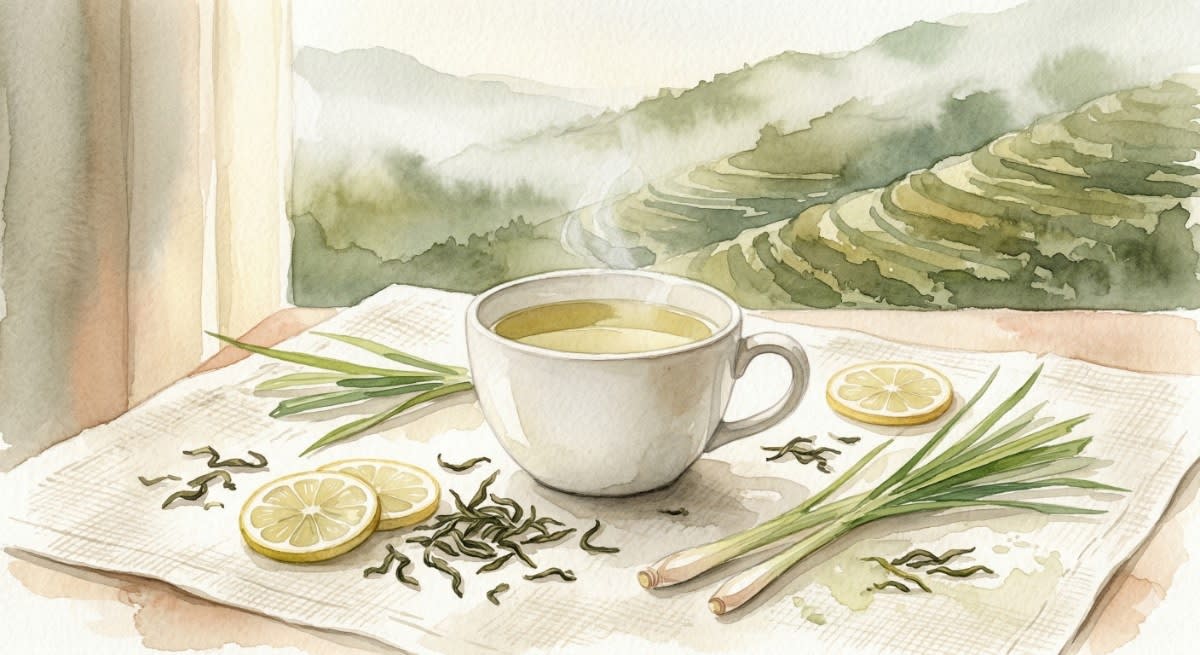
Darjeeling tea is often spoken of in hushed, reverential terms — a Champagne-style designation, a UNESCO-recognised Geographical Indication, the world's most coveted single-origin leaf. But behind every delicate flush of amber in your cup, there is a story that rarely reaches the tasting notes: the story of the people who pick it.
The Gardens of the Eastern Himalayas
Darjeeling district sits in the foothills of the eastern Himalayas in West Bengal, at elevations ranging from 600 to over 2,000 metres. The district is home to approximately 87 registered tea gardens, most of them recognisable by names that still echo their colonial origins — Margaret's Hope, Castleton, Makaibari, Thurbo, Goomtee. These estates collectively cover around 17,500 hectares and produce roughly 8 to 10 million kilograms of tea per year, though that number has been declining in recent decades.
The landscape is spectacular: tiered rows of tea bushes cascading down vertiginous hillsides, shrouded in the morning mist that gives Darjeeling its characteristic muscatel flavour. But maintaining these gardens demands an extraordinary amount of manual labour — labour that is provided almost entirely by descendants of Nepali, Lepcha, and Bhutia communities who settled in the region during the British colonial expansion of tea plantations in the mid-19th century.
The Tea Workers: A Portrait
Approximately 52,000 permanent workers are registered across Darjeeling's tea estates, with many more seasonal and casual workers swelling the workforce during the three main flush seasons. The vast majority are women, who have traditionally been preferred for the delicate task of plucking — their nimble fingers and reportedly greater patience considered ideal for selecting only the two leaves and a bud that define the highest grades of Darjeeling tea.
A skilled plucker in Darjeeling will harvest between 25 and 35 kilograms of green leaf per day during peak season, working on slopes that can be punishing — steep, slippery with morning dew, and often shrouded in cloud. The baskets on their backs, supported by a strap across the forehead, fill steadily through the morning hours. By noon, the greenest pickers will have already harvested more leaf than most of us encounter in a lifetime of tea drinking.
Life on the Garden
Darjeeling's tea estates are not merely workplaces — they are entire communities. The Plantation Labour Act of 1951 mandates that estates above a certain size provide housing, medical care, education, and rations to their workers. In practice, this means many tea garden workers live their entire lives within the bounds of the estate: born in the estate hospital, educated in the estate school, married in the estate grounds, and eventually buried in the estate cemetery.
This arrangement has both advantages and long shadows. On the positive side, permanent workers receive job security, subsidised rations, and housing that they might not access in the open market. On the darker side, the system creates a form of dependency that has, at times, been difficult to exit. Workers whose families have lived on an estate for three or four generations often lack the documentation, the urban connections, or the financial reserves to start elsewhere.
Wages in Darjeeling's tea industry have been a source of persistent tension. Daily wages, which are determined through tripartite negotiations between the tea association, unions, and the state government, have historically lagged behind inflation. In recent years, after successive strikes and negotiations, the daily wage for Darjeeling tea workers has risen, though advocacy groups argue it remains insufficient given the region's high cost of living and the physical demands of the work.
The Three Flushes and the Rhythm of a Year
For tea workers in Darjeeling, the year is governed by the three flush seasons:
First Flush (February to April): The most anticipated harvest. After the dormancy of winter, the first tender shoots emerge as the frost retreats. The leaf is light, floral, and extraordinarily delicate — and the picking requires the most care. Workers return to work after weeks of relative quiet, and there is an energy on the gardens that is almost festive. First flush tea commands the highest prices at auction and in international markets.
Second Flush (May to June): The muscatel season. Warmer temperatures and the onset of the monsoon draw out the characteristic muscatel grape notes that define Darjeeling's global reputation. Second flush teas are fuller in body than first flush, with a deeper amber liquor and that unmistakable jammy sweetness. This is the flush most connoisseurs reach for.
Autumn Flush (October to November): After the monsoon, the bushes produce a final harvest. Autumn flush teas are bolder, more robust, with less of the muscatel complexity but a satisfying full-bodied character that works well blended with milk. The pace of work intensifies before the winter pruning and dormancy begin.
Between these three windows, there is also the monsoon flush — produced through the summer rains — which tends to be used for blending and lower-grade teas. Workers during the monsoon contend with near-constant rain, leeches, and slippery paths, a reality that rarely features in tea room descriptions.
Makaibari: A Story Worth Knowing
No account of Darjeeling tea workers would be complete without mentioning Makaibari — not just because of the quality of its tea, but because of what it represents as a model of how estate life can be structured differently.
Makaibari, established in 1859, was one of the first tea gardens in Darjeeling. Under the late Rajah Banerjee, who took over the estate in the 1970s, it became a pioneer of biodynamic and organic farming. More significantly, Banerjee restructured the estate so that workers became shareholders in the enterprise, receiving a portion of the profits from the sale of their teas. The estate created self-help groups, supported girl children's education, and encouraged workers to have agency in the community beyond the traditional plantation hierarchy.
Makaibari's teas are among the most sought-after in the world — a Silver Tips Imperial white tea once fetched a price of over ₹1 lakh per kilogram at auction. That the workers who produced it shared in that value is an important distinction.
Challenges Facing the Industry
Darjeeling's tea industry faces a convergence of pressures that threaten the livelihoods of its workers and the long-term viability of many estates.
Geographical Indication misuse: Darjeeling tea is a registered GI product — only tea produced in the 87 registered gardens of Darjeeling district can legally bear the name. Yet estimates suggest that global sales of tea labelled \"Darjeeling\" consistently exceed actual production volumes from the district by a factor of three to four. This dilution affects not only consumers but the workers whose labour produces the genuine article, as it limits their ability to command fair prices.
Climate change:The unique terroir of Darjeeling — the interplay of altitude, rainfall, and temperature — is under pressure from shifting weather patterns. Unusual frost events, irregular monsoons, and rising temperatures have already begun to affect the timing and character of the three flushes. Some gardens report that the muscatel season's window is narrowing.
Abandoned estates: Several tea gardens in Darjeeling have been abandoned by their owners in recent decades, often amid financial disputes or mismanagement. When this happens, it is the workers who suffer most immediately — losing wages, rations, and access to essential services without warning. The government has stepped in to keep some of these estates operating under caretaker management, but the situation remains precarious for workers on the affected gardens.
Youth outmigration: As educational opportunities improve, many children of tea garden workers are choosing to build lives outside the estates. This is a positive development in many respects, but it also raises questions about who will pick Darjeeling's tea in the next generation, and whether wages and conditions will need to shift substantially to attract workers from beyond the traditional plantation communities.
What It Means to Choose Carefully
When you hold a cup of Darjeeling first flush — pale gold, faintly muscatel, luminous in the morning light — you are holding the result of centuries of cultivation, ecological specificity, and human labour on steep Himalayan hillsides.
Choosing Darjeeling tea that is genuinely sourced from the registered gardens, purchased from buyers who work directly with estates and pay fair prices, and produced under conditions where workers share equitably in the value they create — these choices matter. They are not just ethical abstractions; they are practical acts that determine whether this extraordinary industry can sustain itself in a form that continues to be worth celebrating.
At Campbell Tea, we source our Darjeeling directly from estates whose practices we have verified, paying attention not just to the leaf in the cup but to the conditions of the people who produced it. The tea should be worth savouring. So should the story behind it.